UPVAN JAWAI
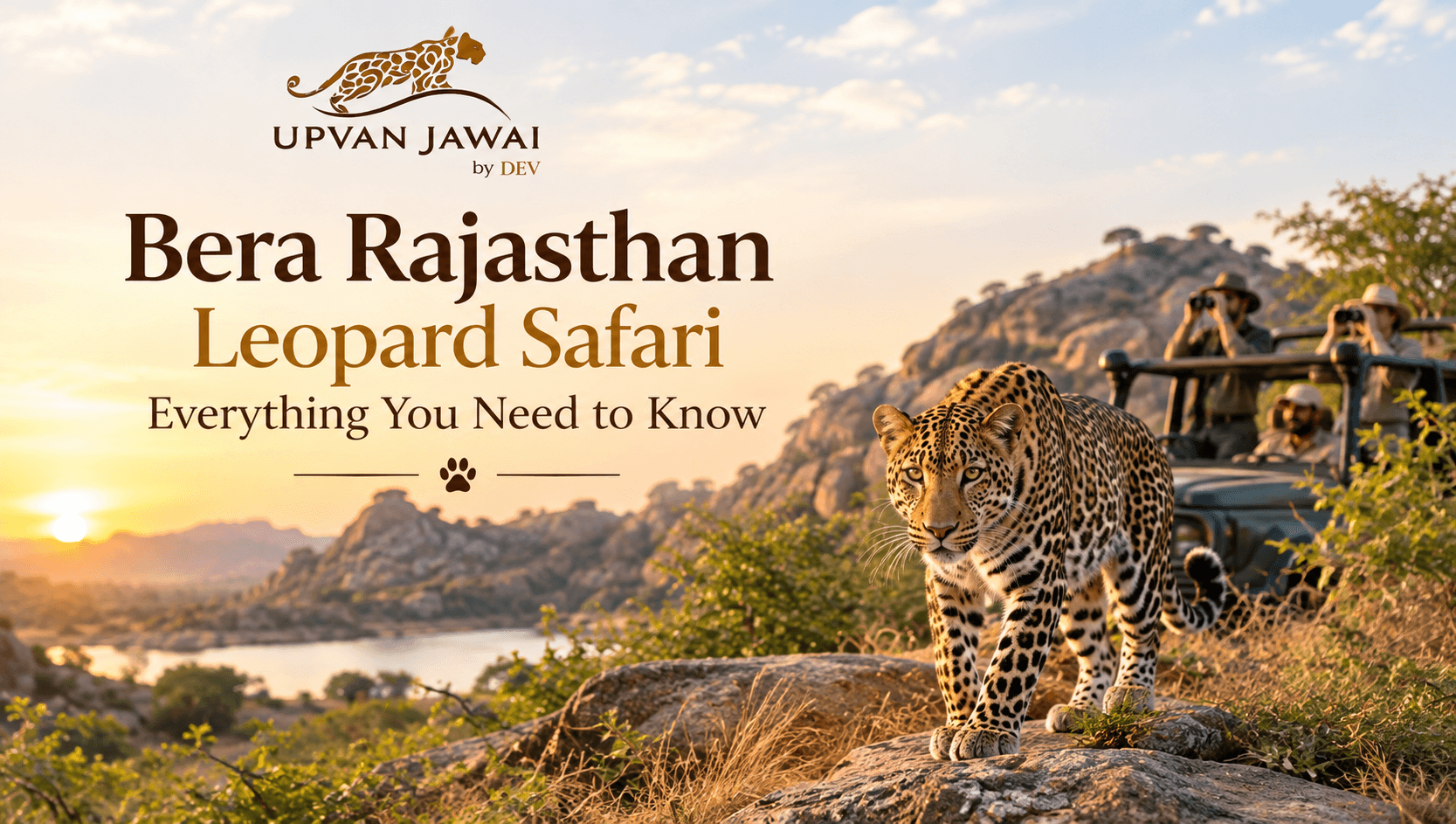
Bera Rajasthan leopard safari: open-jeep drives near Jawai Dam with Upvan Jawai naturalists.
Ask a wildlife traveller where to see wild leopards in India, and most will point you toward a national park. Ask someone who's actually done a Bera Rajasthan leopard safari, and they'll tell you something different — that the best leopard experience they've had wasn't inside a park at all, but out on the open granite hills around a small village called Bera, near Jawai Dam in Pali district.
If you're researching a Bera Rajasthan leopard safari for the first time, this guide covers what the region actually is, how it relates to Jawai, what a safari here involves, and how to plan a trip around it with Upvan Jawai Resort.
What Is Bera, and How Is It Connected to Jawai?
Bera is a small village in Pali district, Rajasthan, sitting within the same granite hill ecosystem that surrounds Jawai Dam. In practice, "Bera" and "Jawai" are often used almost interchangeably by travellers and even by some operators, because the landscape doesn't respect village boundaries — the same rocky hills, caves, and open scrub that hold Jawai's leopard population extend across this entire stretch of Pali district, Bera included.
A Bera Rajasthan leopard safari, then, isn't a separate wildlife experience from a Jawai safari — it's the same ecosystem, the same leopard population, and often the very same safari routes, just referred to by a different local place name depending on which village or property you're based near. What matters far more than which name is on your itinerary is the terrain itself: open granite country with almost nowhere for a leopard to disappear into, which is exactly what makes this region so different from every other big-cat destination in India.
Why This Region Has Some of India's Best Leopard Sightings
The Bera–Jawai belt holds one of the highest recorded leopard densities anywhere in India. Three things combine to make that density both possible and visible:
Granite terrain instead of dense forest. Leopards elsewhere in India rely on thick tree cover to stay hidden. Here, they rest in caves and on exposed rock ledges — often in full daylight, often visible from a genuine distance. It's one of the only places in the country where spotting a resting leopard on open rock, rather than catching a fleeting glimpse through foliage, is a realistic expectation.
A reservoir that anchors the whole ecosystem. Jawai Dam, built across the Jawai River in 1956–57, is the largest reservoir in western Rajasthan. It concentrates prey species through the dry months, which in turn supports the leopard population that ranges across Bera and the surrounding hills. The same water draws over 200 recorded bird species, including greater flamingos, and supports resident mugger crocodiles.
No fences, and no history of conflict. The Rabari, a pastoral herding community, have grazed livestock across these hills for generations alongside a dense wild leopard population, without a tradition of retaliatory killing. That coexistence is the quiet, decades-old foundation that makes a safari here possible at all — a big cat population survives beside people only where people choose to let it.
What a Leopard Safari Around Bera Actually Involves
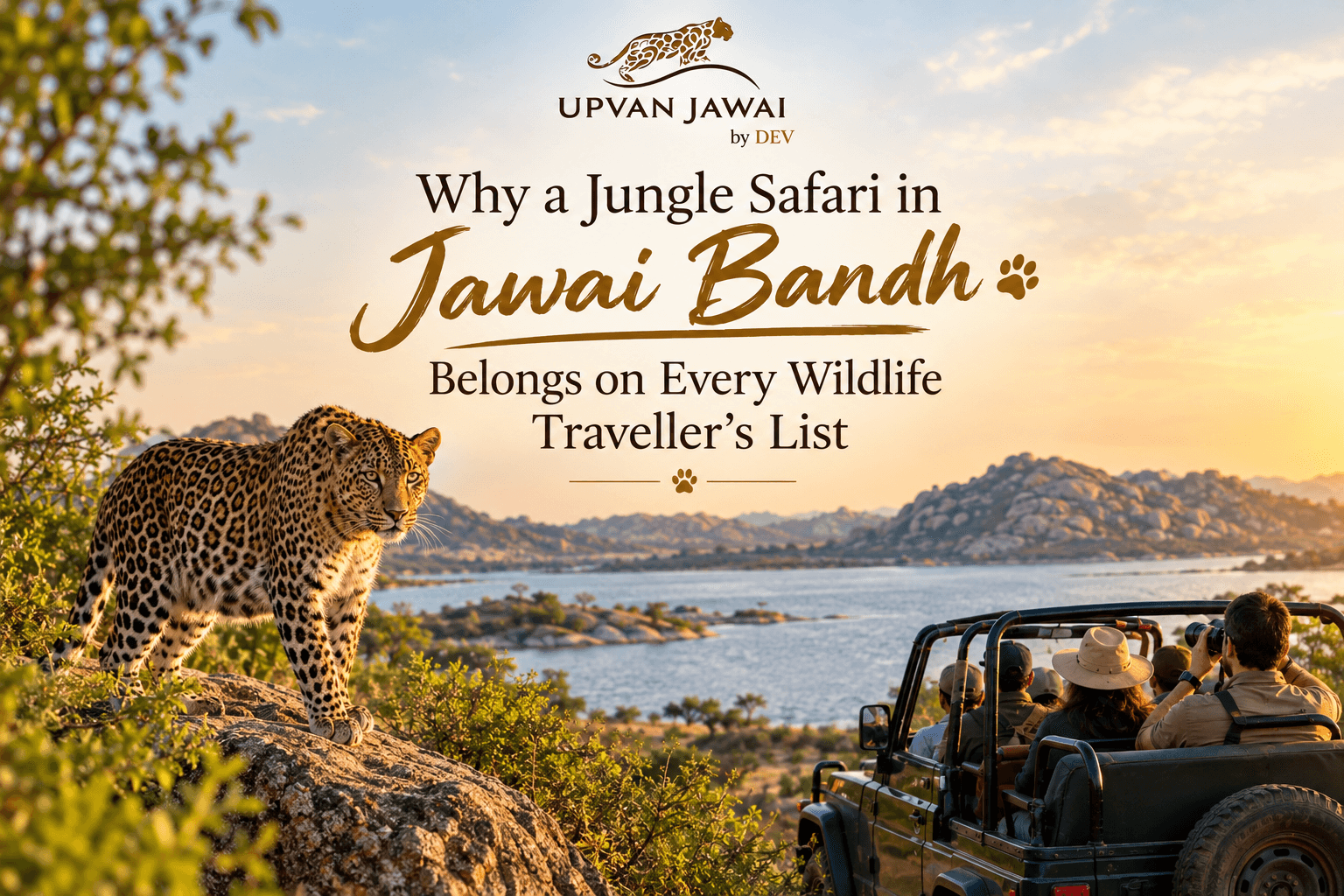
A safari here is a guided open-jeep drive through granite hills, caves, and scrub, run at dawn and dusk with a resident naturalist. Because most of the safari ground sits on community land rather than inside the small notified Jawai Bandh Leopard Conservation Reserve, there's typically no Forest Department permit required, and drives run year-round with no seasonal closure.
Mornings start early — before first light — and the first stretch in an open jeep is genuinely cold through the winter months. As the jeep climbs into the hills, your naturalist will often cut the engine and simply listen. Granite holds almost no pug marks, so tracking here works differently than in a forested park: guides read alarm calls from peafowl and langur, knowledge of which cave a particular female is using that month, and the movement patterns of local grazing herds to work out where a leopard is likely to be.
This is also where a Jawai Jeep Safari and a broader Jungle Safari in Jawai overlap almost completely with a Bera leopard safari — the vehicle, the naturalist-led tracking method, and the terrain are the same experience described from slightly different angles.
Choosing Where to Stay: Why Base Matters
Because Bera and Jawai share the same safari ground, your choice of base matters less for wildlife access and more for logistics — specifically, how far you'll need to travel before and after each drive.
Basing yourself at a property positioned close to the hills themselves, rather than in Bera village or a more distant town, means a dawn safari doesn't start with a long transfer in the dark. This is one of the practical advantages of staying at Upvan Jawai Resort: drives leave directly from the property, putting you in the hills within minutes rather than after a lengthy drive.
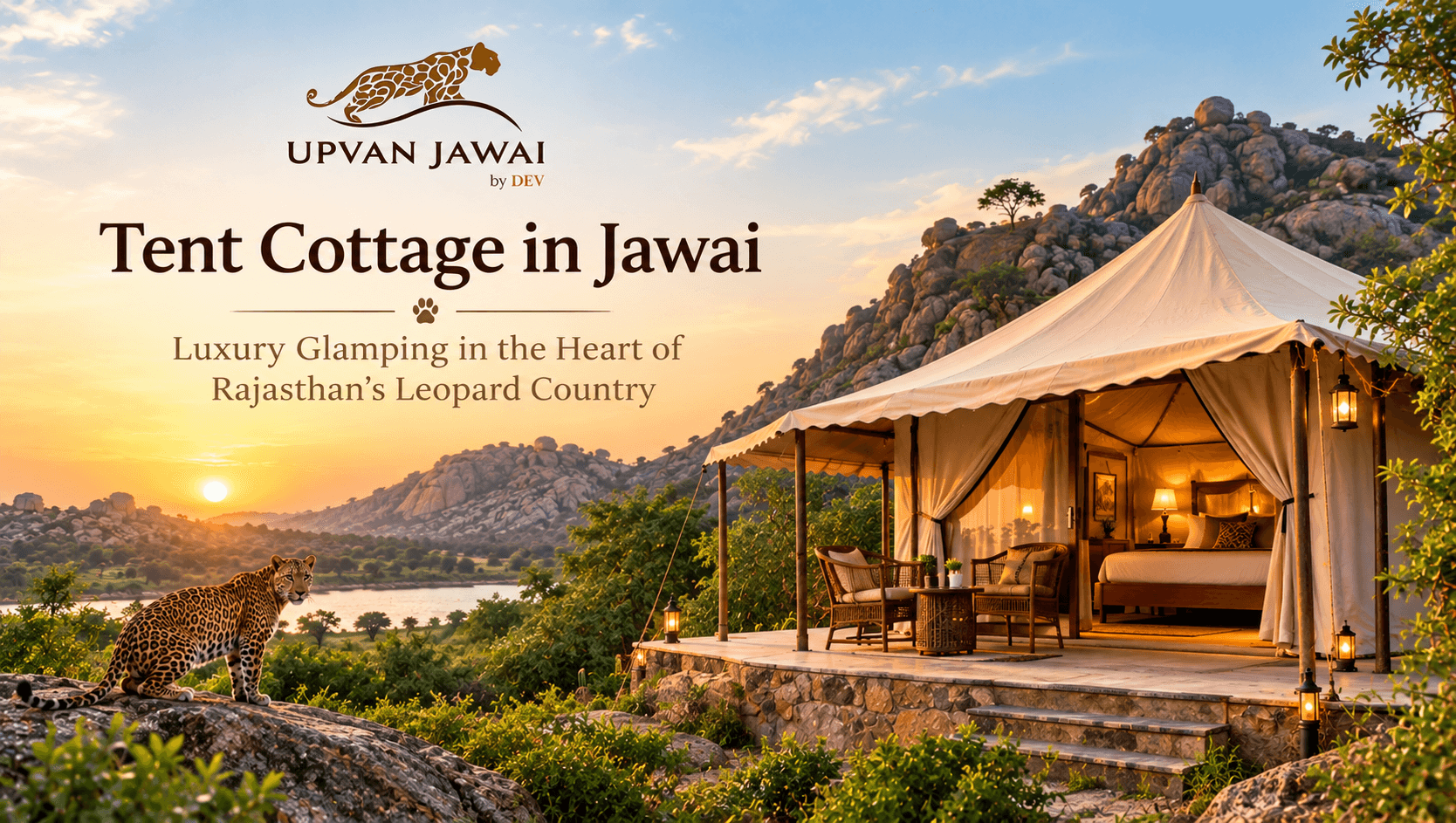
For accommodation, a Tent Cottage in Jawai is worth serious consideration if you're planning a Bera–Jawai leopard safari. Canvas-and-thatch cottages positioned with views of the granite hills let you stay genuinely connected to the landscape between drives — falling asleep to the same calls of langur and peafowl that tip off naturalists to leopard movement on safari, rather than retreating each evening to a disconnected hotel room in town.
How Many Drives Should You Plan For?
A single safari drive gives you a single chance, and on wild, unfenced terrain, that's a real gamble. The stronger approach — one most experienced naturalists in this region recommend — is planning for at least three drives across a minimum two-night stay: morning and evening on your first full day, plus one additional slot.
This matters more here than it might at a fenced national park, because there's no guaranteed circuit bringing you past a known leopard's territory. A Leopard Safari in Jawai works on patience and naturalist skill, not a fixed route, so giving yourself multiple attempts meaningfully improves your odds without ever guaranteeing a sighting — no responsible operator in this region will promise you one.
Best Time for a Bera Rajasthan Leopard Safari
PeakOctober–MarchMild days, cold dawns, migratory birds on the reservoir. Most popular booking window.SummerApril–JuneTemperatures exceed 40°C. Shrinking water sources concentrate wildlife — a strong window for photographers.MonsoonJuly–SeptemberGranite hills turn green. Fewest visitors, quieter safaris. Some tracks become difficult after heavy rain.Because there's no seasonal closure across this region, a Bera Rajasthan leopard safari is genuinely possible in any month — a real advantage over India's gated national parks, most of which shut for several months each year.
Responsible Safari Conduct in This Region
Because Bera and Jawai's leopards live on unfenced, shared land rather than inside a controlled park, responsible field conduct matters more here than almost anywhere else in India. A well-run safari should always maintain:
- Distance held at the leopard's discretion — the animal decides how close an encounter gets, not the jeep
- Guide-led routes only, with no off-track pursuit of a sighting
- No baiting, calling, or crowding around a resting or moving leopard
- Engine off and voices down whenever a sighting occurs
This isn't just an ethical standard — it's also the practical reason sightings here tend to last longer than a rushed, crowded approach would allow. A leopard that feels undisturbed simply stays visible longer.
What to Pack
- Neutral-coloured clothing — olive, khaki, beige
- Closed shoes suited to uneven granite terrain
- A proper jacket, scarf, and hat for dawn drives between November and February
- Binoculars — many sightings begin as a distant, ambiguous shape on rock
- A long lens (200–500mm) if you're shooting photography
- No strong perfume or scent
Planning Your Trip
Whether you find this region searching for "Bera Rajasthan leopard safari," "Jawai Jeep Safari," or simply "leopard safari near Jawai Dam," you're looking at the same landscape, the same leopard population, and largely the same experience. What differs is which property you stay at and how that property connects you to the hills.
To plan a stay and safari drives with Upvan Jawai Resort, reach out via WhatsApp at +91 90798 46869 or send your travel dates through the enquiry form. Given how limited jeep numbers are across this region, especially during the October–March season, booking ahead is strongly recommended.
FAQ: Bera Rajasthan Leopard Safari
Is a Bera safari the same as a Jawai safari?
Largely, yes. Bera and Jawai sit within the same granite hill ecosystem in Pali district, and safaris from either base typically cover overlapping terrain and the same resident leopard population. The distinction is more about which village or property you're staying near than a different wildlife experience.
Do I need a Forest Department permit for a leopard safari near Bera?
No permit is required for most of the safari ground, since it lies outside the small notified Jawai Bandh Leopard Conservation Reserve and is accessed through community land arrangements instead.
Are leopard sightings guaranteed on a Bera Rajasthan leopard safari?
No. Sightings are frequent, and many guests see a leopard on their first drive, but these are wild, unbaited animals on open, unfenced ground. Be cautious of any operator advertising a specific sighting-rate percentage.
How many days should I plan for a leopard safari trip to this region?
A minimum two-night stay with at least three drives — covering both morning and evening slots — gives you a realistic, well-paced chance at a sighting without compressing the experience into a single rushed outing.
What's the best time of year for a Bera or Jawai leopard safari?
October to March offers the most comfortable conditions and the best overall safari experience, though the region has no seasonal closure and can be visited year-round.
Where should I stay for a Bera Rajasthan leopard safari?
A property positioned close to the granite hills themselves — rather than in Bera village or a distant town — cuts down transfer time before dawn drives. A tent cottage stay at a property like Upvan Jawai Resort keeps you immersed in the landscape between safaris rather than separated from it.
Written by Upvan Jawai
Plan your stay