UPVAN JAWAI

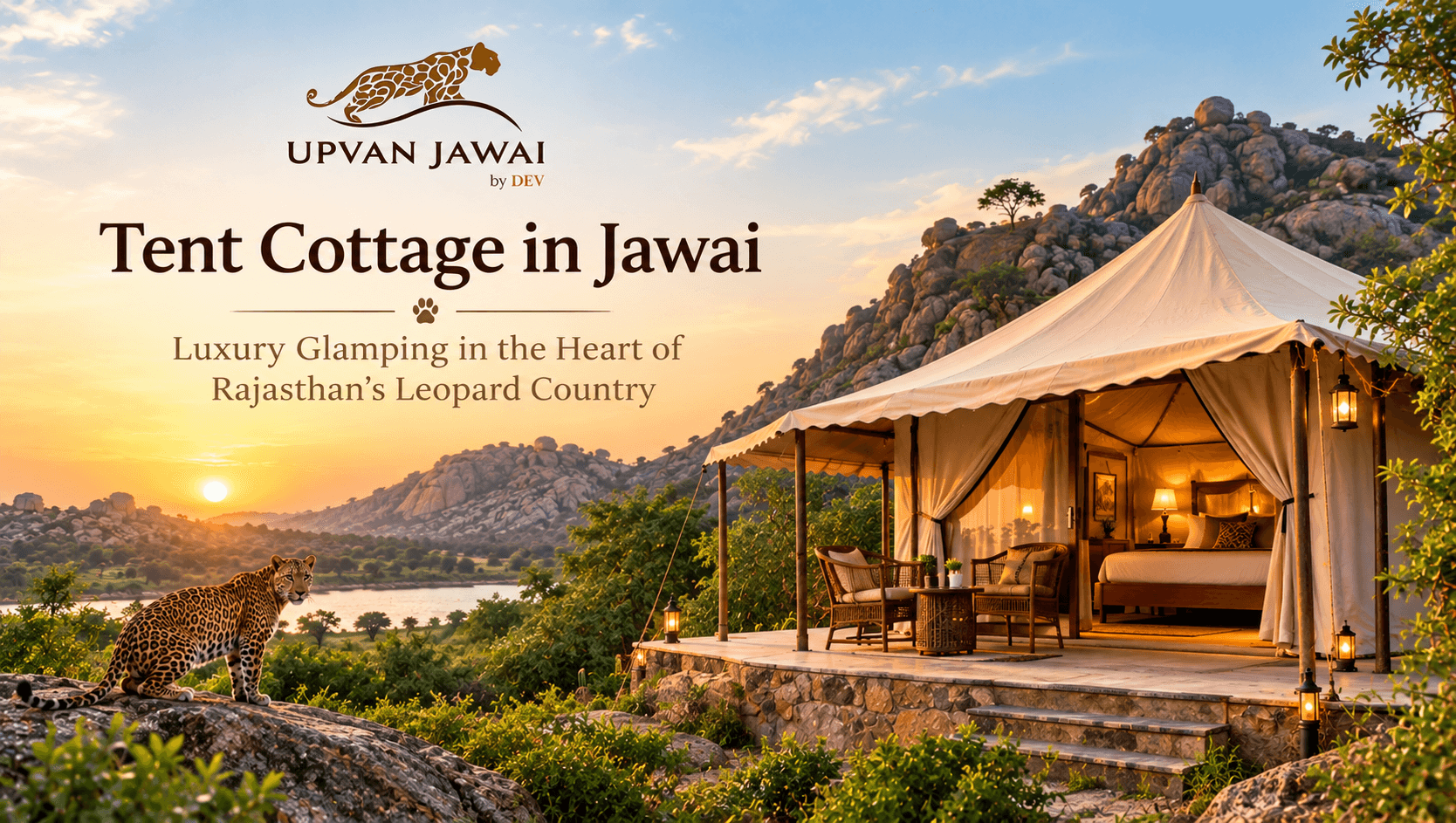
Tent cottage in Jawai: luxury glamping amid granite hills & leopard country with Upvan Jawai.
There's a particular magic to waking up inside canvas walls with granite hills rising just beyond your tent flap, the calls of peafowl drifting in from the scrub, and the knowledge that somewhere in those boulders, a leopard may be watching the same sunrise. A tent cottage in Jawai isn't a compromise between comfort and wilderness — done right, it's the best possible way to experience both at once. This is what Upvan Jawai has built its stay around, and it's worth understanding what makes this particular style of accommodation so suited to this particular landscape.
What Is a Tent Cottage, and Why Jawai Is Built For It
A tent cottage sits in the space between a traditional safari tent and a permanent room — canvas and thatch construction with the structural comfort of a proper cottage: solid flooring, real furniture, attached bathrooms, and weatherproofing that holds up through Rajasthan's temperature swings, but with the breathability, light, and closeness to the outdoors that only fabric walls can offer.
Jawai is an unusually good match for this format. Unlike forested safari zones where dense tree cover limits views, Jawai's terrain is open granite and scrub — which means a tented stay here isn't hemmed in. Cottages positioned with a view of the hills let guests watch the light change across the rock formations through the day, something a solid concrete structure with small windows simply can't replicate in the same way.
Inside the Tent Cottage Experience
The appeal of a tent cottage isn't roughing it — it's a considered version of comfort that still keeps you connected to where you are.
Typically, a well-designed tent cottage in this region includes:
- A private attached bathroom, often with a rain shower
- A proper bed frame and quality linens rather than a cot
- Seating areas — sometimes a small private veranda facing the hills
- Warm lighting suited to off-grid or low-light evenings
- Ventilation and shading designed for both cold desert nights and hot afternoons
What tends to set a strong tent cottage apart from an ordinary one is attention to Rajasthan's specific climate demands: proper insulation for winter nights that can dip close to freezing, and cross-ventilation or shading strategies for summer afternoons that regularly cross 40°C. A well-built cottage manages both without needing you to think about it.
Falling Asleep and Waking Up in Leopard Country
What genuinely distinguishes a stay in a Jawai tent cottage from a tented camp almost anywhere else is what's just outside it.
This is leopard country — not in the abstract, marketing sense, but literally. The granite hills that surround Jawai Dam hold one of the highest leopard densities recorded in India, and the same Rabari herding families who have shared this land with the cats for generations are often the ones working the property, guiding safaris, and shaping the food on your table. A stay here isn't separate from the wildlife experience; it's continuous with it.
Evenings often carry the calls of langur and peafowl across the scrub — the same alarm calls that tip off naturalists to a leopard's movement on a safari drive. Mornings can begin with the option of stepping straight from your tent cottage into a dawn jungle safari, jeep waiting at the property, no long transfer required.
For anyone drawn to Jawai specifically for its leopard safaris, a tent cottage stay is really the natural way to experience it — you're not visiting the landscape for a few hours a day and retreating somewhere disconnected from it each evening. You're staying inside it.
A Landscape Built by a Dam
It's worth understanding the terrain around your tent cottage, because it's not incidental to the experience — it's the reason Jawai looks and feels the way it does.
Jawai Dam, built across the Jawai River in 1956–57, is the largest reservoir in western Rajasthan. What began as an irrigation project has, over decades, shaped an entire ecosystem: it concentrates wildlife around its shores through the dry months, draws over 200 recorded bird species including greater flamingos, and supports resident mugger crocodiles in its waters. The granite hills rising above it hold caves that give leopards secure daybeds within sight of the villages and, often, within sight of the properties built to host visitors.
Staying in a tent cottage here means staying inside a landscape shaped by that reservoir's ripple effects — granite outcrops on one side, working farmland and grazing land on another, water and its birdlife somewhere close by. Few places in India offer this particular combination of a five-decade-old water body, high-density wild leopards, and an unbroken pastoral community, all visible from a single stay.
Days Built Around the Rhythm of the Land
A tent cottage stay at Jawai naturally organizes itself around the same early-morning, late-evening rhythm that governs the wildlife here.
Early mornings typically mean a jungle safari drive — jeeps leave before first light, climbing into the granite hills while the air is still cold enough to need a proper layer, in search of leopards resting on exposed rock.
Midday tends to slow down, both because of the heat outside much of the year and because this is when the property itself becomes the draw — resting on a shaded veranda, watching the hills shift color as the sun moves, or exploring nearby village life at an easier pace.
Evenings bring the second safari slot, timed to sunset, followed by dinner and the particular quiet of a desert night settling over canvas walls — no city light pollution, often extraordinary stargazing given how remote and unlit this stretch of Rajasthan remains.
[VERIFY WITH PROPERTY: specific activities offered beyond safaris — village walks, birdwatching at the reservoir, cultural experiences with the Rabari community, stargazing sessions, meal style (set menus, in-tent dining, communal dining area).]
Food, Culture, and the Rabari Connection
Much of what makes a stay at Jawai memorable happens away from the safari jeep entirely. The Rabari, the pastoral herding community whose coexistence with Jawai's leopards has sustained this ecosystem for generations, are woven into the fabric of daily life here — not as a staged cultural exhibit, but as neighbours, staff, and the people whose grazing patterns naturalists read to track leopard movement.
A tent cottage stay at a well-run Jawai property often reflects this connection through food rooted in Rajasthani tradition, staff drawn from surrounding villages, and an operating philosophy that treats the local community as a genuine partner rather than a backdrop. It's worth asking, when you book, how a property engages with the Rabari and surrounding villages — it tends to be a good indicator of how thoughtfully the whole experience has been put together.
Best Time to Stay in a Jawai Tent Cottage
Because a tent cottage is more exposed to outdoor conditions than a conventional hotel room, timing your visit matters more here than it might elsewhere.
October to March is the standout season — mild days, crisp, clear nights, and migratory birds settled on the reservoir. This is also peak safari season, so a tent cottage stay during these months pairs naturally with strong leopard-sighting conditions. Expect proper cold in the early mornings and evenings; a good tent cottage will be built to handle this comfortably, but pack layers regardless.
April to June brings serious heat — 40°C and above by midday — though shrinking water sources concentrate wildlife in ways photographers often find rewarding. A well-designed tent cottage with good ventilation and shading becomes especially important in this window.
July to September, the monsoon, transforms the granite hills green and brings the fewest visitors. Some safari tracks become difficult, but for travellers who prioritize quiet and don't mind cooler, wetter conditions, this is an underrated season to experience a tent cottage stay with the whole landscape to yourself.
What to Pack for a Tent Cottage Stay
- Layered clothing — even summer nights can cool down considerably in the desert
- A proper jacket, scarf, and hat for October–February stays
- Comfortable, closed footwear for walking on uneven granite terrain
- A flashlight or headlamp for moving around after dark
- Binoculars, useful for both safari drives and birdwatching from the property itself
- Neutral-colored clothing if you're heading out on safari during your stay
Why a Tent Cottage Beats a Conventional Room Here
It would be easy to book a standard hotel room somewhere near Jawai and treat the safari as a separate excursion. But a tent cottage changes the relationship between where you sleep and what you came to see. Canvas walls mean the outside world is never fully shut out — sound, temperature, and light all filter through in a way concrete never allows. For a place defined by open granite hills, unfenced wildlife, and a landscape built around one dam's decades-long influence, that permeability isn't a limitation. It's the entire point.
Planning Your Stay
A tent cottage stay at Jawai works best paired with enough time to actually experience the landscape properly — most travellers find that a minimum of two nights allows for both morning and evening safari drives across multiple days, rather than compressing everything into a single rushed visit.
To check availability and plan your stay in a Jawai tent cottage with Upvan Jawai, reach out via WhatsApp at +91 90798 46869 or send your travel dates through the enquiry form. Given how closely tied accommodation and safari slots are here, especially during the October–March season, booking ahead is worth doing well before you travel.
Written by Upvan Jawai
Plan your stay